WIC West Virginia logo
NormalNewbornFeedingPatterns

Newborn Hunger Cues: How to Know When Your Baby Is Hungry or Full

March 25, 2026 Women

breastfeeding Hunger Cues and “Normal” Newborn Feeding Patterns

Knowing when your baby is hungry, and when they are full, can help feeding feel easier and less stressful.
Newborns usually eat 8 to 12 times each day, so learning your baby’s cues is important. Instead of feeding on a strict schedule, it’s best to feed your baby when they show signs of hunger.

Watch this video to learn more:

[videosharebutton url="https://vimeo.com/1161565369?fl=pl&fe=ti"]
Flower top shape
Flower Bottom shape

breastfeeding Hunger Cues and “Normal” Newborn Feeding Patterns

Knowing when your baby is hungry, and when they are full, can help feeding feel easier and less stressful. Newborns usually eat 8 to 12 times each day, so learning your baby’s cues is important. Instead of feeding on a strict schedule, it’s best to feed your baby when they show signs of hunger.

Babie How to Tell When Your Baby is Hungry

Babies show hunger in stages. Early signs are gentle and easy to miss, so watching closely can help you feed before your baby gets upset.

baby playfully sticking its tongue
EARLY HUNGER CUES MAY INCLUDE:
A baby with blue eyes and light skin lies on a soft
AS HUNGER GROWS, YOUR BABY MAY:

Crying is a late hunger sign. Feeding earlier, before crying, can help your baby latch and feed more calmly.

mother gently breastfeeding her infant

hand How to Tell If Your Baby Is Still Hungry or Full

During a feeding, try offering both breasts. Sometimes babies fall asleep while nursing, but that does not always mean they are done.

Ways to check if your baby is still hungry:
#1
Gently lift your baby’s arm away from their body
#2
Look at their hands
Tip!

If your baby gets sleepy but still seems hungry, gently switch positions to help wake them and continue feeding.

A full baby often looks relaxed, calm, and loose in their body.

nots What is Cluster Feeding?

Some days, especially during growth spurts, your baby may want to eat more often or have feeds close together. This is called cluster feeding, and it is normal. Watching your baby’s hunger cues can be very helpful during these times.

Cluster feeding:

people heart When to Get Support

If you have questions about feeding, notice discomfort while nursing, or feel unsure, help is available.

You can contact:

You do not have to figure this out alone.
Support can make a big difference.

REFERENCES:

Side-Lying Hold

  1. For the right breast, lie on your right side with your baby facing you.
  2. Pull your baby close. Your baby’s mouth should be level with your nipple.
  3. In this position, you can cradle your baby’s back with your left arm and support yourself with your right arm and/or pillows.
  4. Keep loose clothing and bedding away from your baby.
  5. Reverse for the left breast.

This hold is useful when:

Cross-Cradle Hold

  1. For the right breast, use your left arm to hold your baby’s head at your right breast and baby’s body toward your left side. A pillow across your lap can help support your left arm.
  2. Gently place your left hand behind your baby’s ears and neck, with your thumb and index finger behind each ear and your palm between baby’s shoulder blades. Turn your baby’s body toward yours so your tummies are touching.
  3. Hold your breast as if you are squeezing a sandwich. To protect your back, avoid leaning down to your baby. Instead, bring your baby to you.
  4. As your baby’s mouth opens, push gently with your left palm on baby’s head to help them latch on. Make sure you keep your fingers out of the way.
  5. Reverse for the left breast.

This hold is useful when:

A green circle encloses a stylized shoe and footprint design, symbolizing forward movement and progress.

Clutch or “Football” Hold

  1. For the right breast, hold your baby level, facing up, at your right side.
  2. Put your baby’s head near your right nipple and support their back and legs under your right arm.
  3. Hold the base of your baby’s head with your right palm. A pillow underneath your right arm can help support your baby’s weight.
  4. To protect your back, avoid leaning down to your baby. Bring baby to you instead.
  5. Reverse for the left breast.

This hold is useful when:

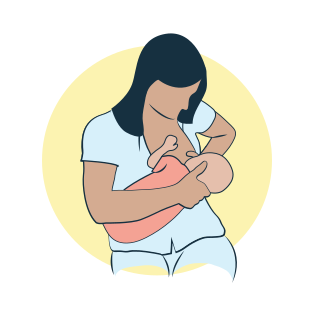
Cradle Hold

  1. For the right breast, cradle your baby with your right arm. Your baby will be on their left side across your lap, facing you at nipple level.
  2. Your baby’s head will rest on your right forearm with your baby’s back along your inner arm and palm.
  3. Turn your baby’s tummy toward your tummy. Your left hand is free to support your breast, if needed. Pillows can help support your arm and elbow.
  4. To protect your back, avoid leaning down to your baby. Instead, bring your baby to you.
  5. Reverse for the left breast.

This hold is useful when:

Laid-Back Hold

  1. Lean back on a pillow with your baby’s tummy touching yours and their head at breast level. Some moms find that sitting up nearly straight works well. Others prefer to lean back and lie almost flat.
  2. You can place your baby’s cheek near your breast, or you may want to use one hand to hold your breast near your baby. It’s up to you and what you think feels best.
  3. Your baby will naturally find your nipple, latch, and begin to suckle.

This hold is useful when: